Blog

Beyond Sperm DNA Fragmentation: Why We Need a More Comprehensive Approach to Sperm Functionality

Are we measuring the whole sperm cell, or only one aspect of its reproductive potential? Sperm DNA fragmentation (SDF) has become an increasingly important topic in reproductive medicine. Over recent years, it has attracted considerable attention because of its potential association with male infertility, impaired embryo development, pregnancy loss, and assisted reproductive technology (ART) outcomes. […]

Read More

Evolutionary and epigenetic drivers of the global trajectory of sperm count decline: an integrative framework for male reproductive health

Global meta-analyses have documented a decline in sperm concentration of approximately 50% since the 1970s, with rates accelerating from 1.16% to 2.64% annually. A parallel decline in serum testosterone (approximately 1.2%/year) has been documented. Integrating evolutionary, epigenetic and epidemiological perspectives may clarify the vulnerability of human spermatogenesis to contemporary environmental conditions. This narrative review synthesizes […]

Read More

Body fat percentage in relation to semen characteristics, testicular volume, and reproductive hormones: a cross-sectional study

STUDY QUESTION Is body fat percentage associated with semen characteristics, testicular volume, and reproductive hormone levels? SUMMARY ANSWER Higher body fat percentage was associated with poor semen characteristics and impaired reproductive hormone levels but not with testicular volume. WHAT IS KNOWN ALREADY High BMI is associated with poor semen characteristics and impaired reproductive hormone levels. […]

Read More

AI vs Traditional Sperm Selection

AI vs Traditional Sperm Selection for ICSI: What’s the Difference? Sperm selection is an essential laboratory step during ICSI. Traditionally, an embryologist examines sperm under a microscope and selects an individual sperm based on observable characteristics. Artificial intelligence is introducing another approach: using computer-based analysis to provide additional information about sperm. But what is actually […]

Read More

Effect of Ejaculatory Abstinence Duration on Laboratory and Clinical Outcomes in IVF: A Retrospective Analysis

Background The recommended ejaculatory abstinence (EA) period prior to semen collection varies between regulatory bodies. The World Health Organization recommends 2–7 days, whereas the European Society of Human Reproduction and Embryology and the Nordic Association for Andrology recommend 3–4 days. Prolonged epididymal storage of spermatozoa may increase sperm DNA fragmentation, and impair subsequent embryo development […]

Read More

Associations Between Perceived Stress and Sperm DNA Methylation Among Men Attending a Fertility Center

BackgroundStress has been negatively associated with reproductive outcomes, including poor semen quality in men; however, the molecular mechanisms underlying these associations remain poorly understood. ObjectivesThis study aimed to evaluate the association between perceived stress and sperm DNA methylation patterns in men undergoing infertility treatment. Materials and MethodsThe study was conducted on 169 men attending the […]

Read More

How Sperm Tracer Works

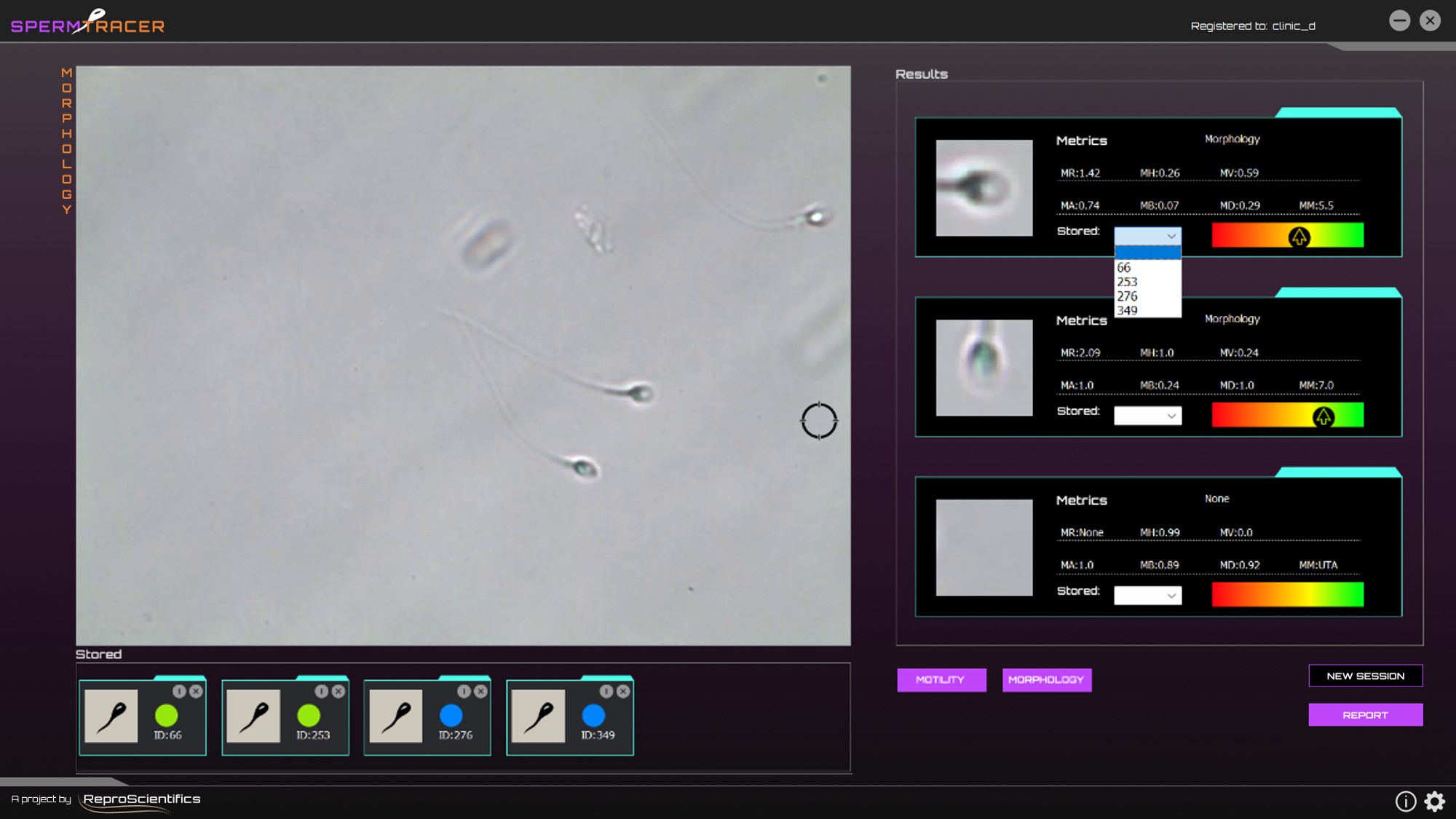
How Does Sperm Tracer Work? Understanding AI-Assisted Sperm Selection The technology is designed to provide real-time information about sperm characteristics while keeping the embryologist at the center of the decision-making process. What does Sperm Tracer analyze? Sperm Tracer is designed to assess important sperm characteristics, including: It also includes a Spermatozoa Detector designed to assist […]

Read More

The role of sperm DNA fragmentation testing in predicting IVF and PGT-A outcomes

This retrospective study evaluated whether sperm DNA fragmentation (SDF), measured by DNA fragmentation index (DFI), predicts IVF outcomes in 124 couples undergoing IVF with PGT-A (Preimplantation Genetic Testing for Aneuploidy) between 2015 and 2023. SDF was assessed using the Halosperm kit and categorized into low (≤15%, n=81), medium (15–30%, n=34), and high (≥30%, n=9) DFI […]

Read More

AI Sperm Selection for ICSI

Can AI Improve Sperm Selection for ICSI? When couples undergo ICSI, one sperm is carefully selected by an embryologist and injected directly into the egg. This makes sperm selection an important part of the laboratory process. Traditionally, embryologists assess sperm by observing characteristics such as movement and appearance under a microscope. Advances in artificial intelligence […]

Read More