AI vs Traditional Sperm Selection for ICSI: What’s the Difference?
Sperm selection is an essential laboratory step during ICSI. Traditionally, an embryologist examines sperm under a microscope and selects an individual sperm based on observable characteristics.
Artificial intelligence is introducing another approach: using computer-based analysis to provide additional information about sperm.
But what is actually different?
Traditional sperm selection
In conventional ICSI, the embryologist typically evaluates sperm using microscopy.
The assessment may include:
- Whether the sperm is moving
- How the sperm is moving
- General sperm morphology
- Visible abnormalities
- Suitability for injection
The embryologist then selects an individual sperm according to laboratory procedures and professional judgment.
Human expertise remains central to this process.
What does AI-assisted selection add?
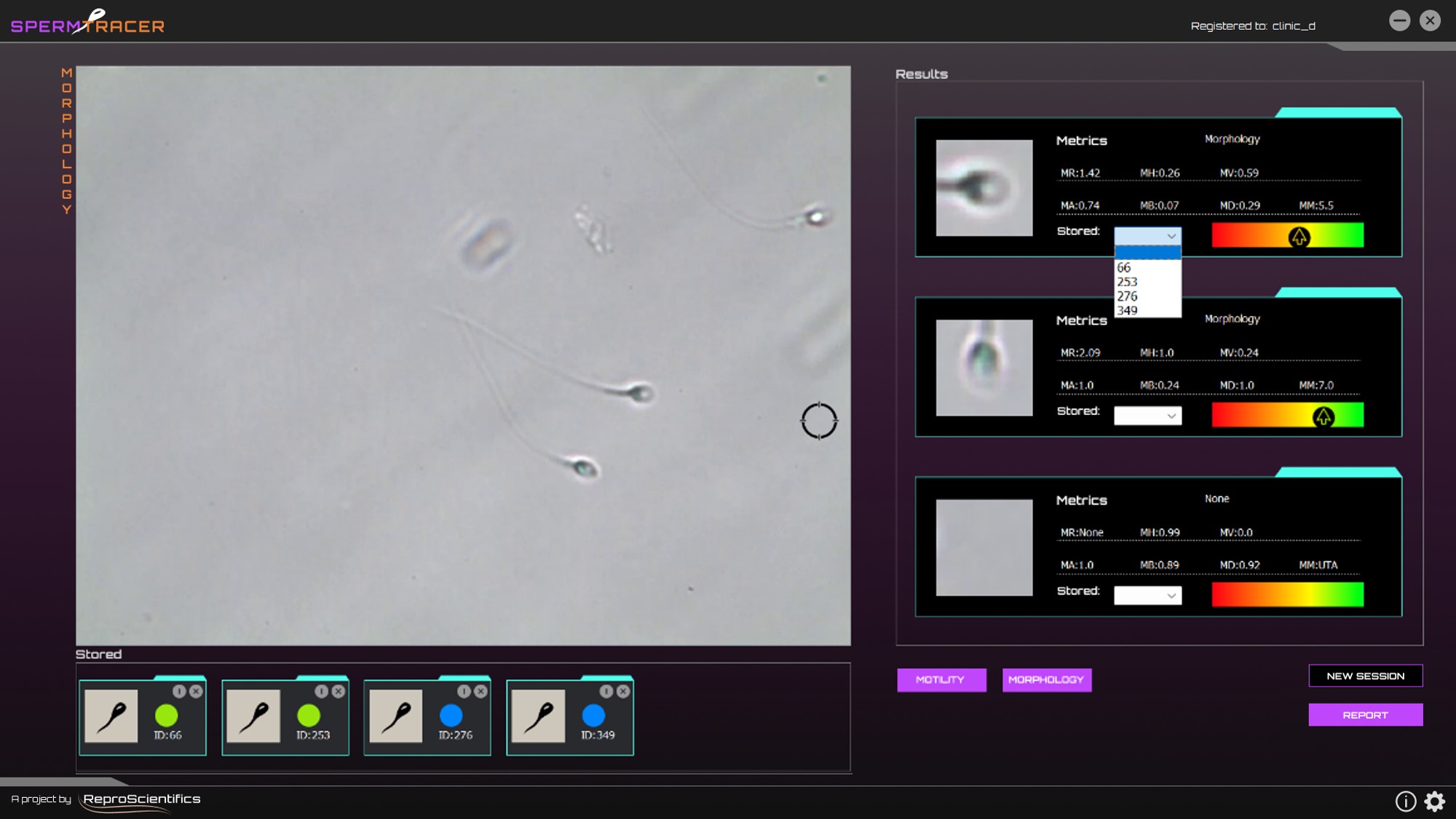
AI can analyze visual information computationally.
Depending on the technology, an AI system may be able to measure characteristics such as:
- Sperm movement
- Speed and trajectory
- Motility patterns
- Morphological characteristics
- Individual sperm detection
This can potentially turn aspects of sperm assessment into measurable data.
Does AI replace traditional sperm selection?
Not necessarily.
The most useful way to think about AI in this setting is as an additional layer of information.
The embryologist still needs to interpret the available information and perform the ICSI procedure.
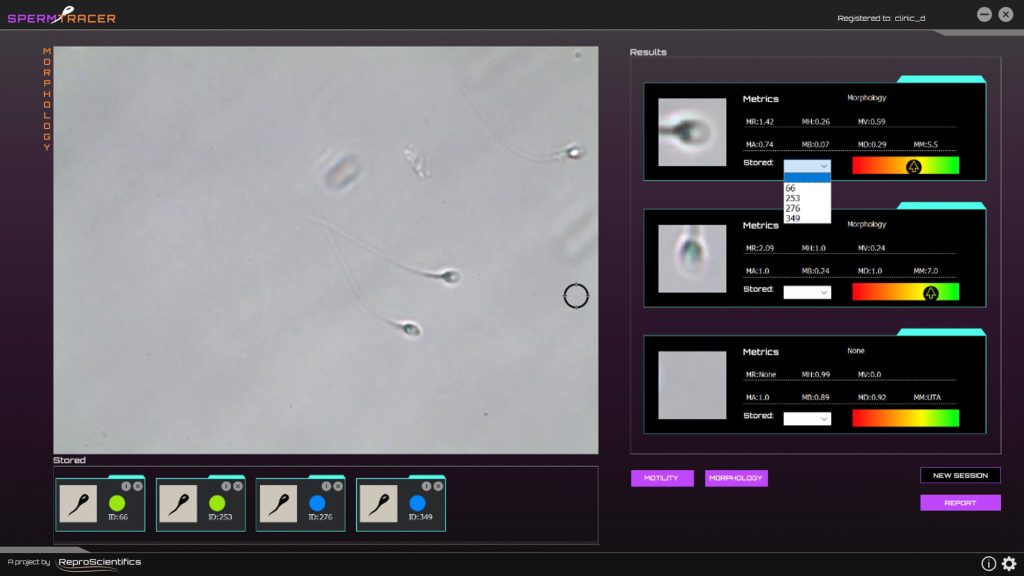
Sperm Tracer is designed around this approach.
Sperm Tracer: AI-assisted rather than AI-replaced
Sperm Tracer provides AI-assisted analysis of sperm characteristics while keeping the embryologist involved in the process.
This approach recognizes that sperm selection is part of a complex laboratory workflow and that professional judgment remains important.
Is AI proven to improve IVF success?
This question needs careful consideration.
Research into AI-assisted sperm selection is ongoing. Evidence from individual studies should not be interpreted as a universal guarantee that AI will increase fertilization, pregnancy, or live-birth rates.
Different AI systems, algorithms, laboratory protocols, patient populations, and study designs can produce different results.
For this reason, fertility clinics should evaluate technologies based on validated evidence relevant to their intended use.
Why might laboratories be interested in AI?
AI may offer several potential advantages worth investigating:
Consistency: Computer-based measurements can potentially be repeated using the same analytical criteria.
Quantification: AI can convert visual observations into measurable parameters.
Real-time support: Some systems can provide analysis while the embryologist is working.
Difficult samples: Automated detection may be particularly useful when sperm are scarce or difficult to identify.
The role of the embryologist remains essential
Technology does not remove the need for skilled embryologists.
Instead, AI-assisted tools may provide another source of information to support their expertise.
That combination—technology plus professional judgment—is the approach behind Sperm Tracer.
Explore how Sperm Tracer supports AI-assisted sperm selection
Hey! If you found this post interesting or useful, you can help us get even better by subscribing to our newsletter. Just write your email and you’ll have the latest fertility news.
Thank you once more for your help.